

Volkswagen Tiguan Research
Compare Volkswagen Tiguan trims, turbocharged engines, available 4MOTION all-wheel drive, cargo space, technology, IQ.DRIVE and other key details before you start shopping specific Tiguan models.
Volkswagen Tiguan at a Glance
Research the Volkswagen Tiguan
The Volkswagen Tiguan is a compact SUV for shoppers who want practical family space without giving up a distinctly European driving and design feel.
The current third-generation Tiguan offers a 201-horsepower turbocharged engine across most of the lineup, while the SEL R-Line Turbo gives shoppers a stronger 268-horsepower performance option. Available 4MOTION all-wheel drive and nearly 70 cubic feet of maximum cargo space keep the Tiguan firmly grounded in everyday utility.
Is the Volkswagen Tiguan Right for You?
Tiguan is a strong fit for shoppers who want a compact SUV that feels mature and composed rather than overtly rugged. The two-row layout provides useful passenger space, the cargo area is large enough for family use, and the cabin design puts an emphasis on clean materials and large digital displays. Available 4MOTION all-wheel drive also makes it a practical year-round option for Midwest driving.
If you need a third row, the current U.S. Tiguan is not the answer; shoppers should move up to a larger SUV. If hybrid fuel economy is a must-have, competitors such as the Toyota RAV4, Honda CR-V Hybrid and Hyundai Tucson Hybrid offer electrified powertrains that Tiguan does not currently match. Tiguan instead makes its case through refinement, useful packaging and an available higher-output turbo engine.
Volkswagen Tiguan Trim Levels
The Tiguan lineup ranges from a well-equipped entry point to sportier R-Line models and a higher-output performance-oriented flagship.
S
S establishes the Tiguan’s core equipment with the standard 201-horsepower turbo engine, 12-inch display and modern driver-assistance technology. It is the value-focused place to start.
SE
SE adds more comfort and convenience for shoppers who plan to use the Tiguan as a primary daily vehicle while keeping the same core turbocharged performance.
SE R-Line Black
SE R-Line Black adds a sportier exterior treatment and more aggressive visual details for shoppers who want the R-Line look without moving all the way to the top performance trim.
SEL R-Line Turbo
SEL R-Line Turbo is the performance and luxury-focused Tiguan. Its higher-output 2.0L turbo engine produces 268 horsepower and 258 lb.-ft. of torque, with 4MOTION all-wheel drive as part of the formula.
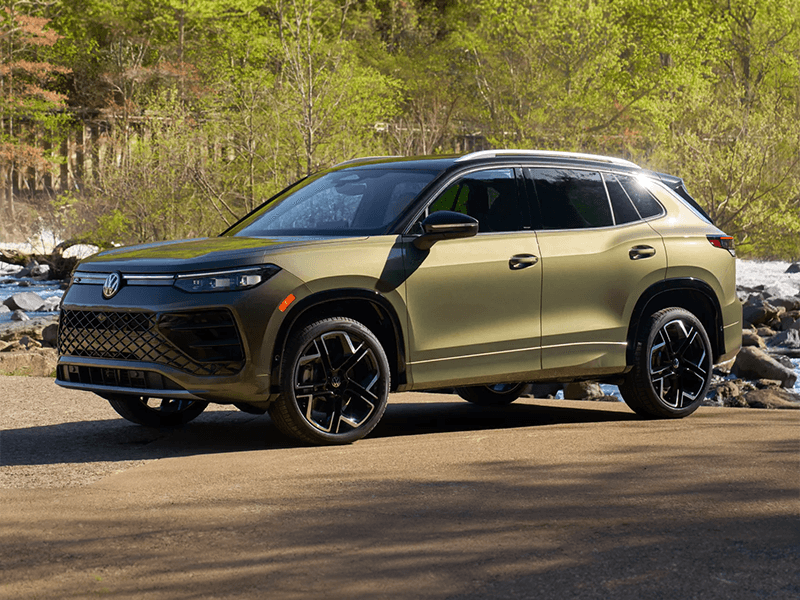
Volkswagen Tiguan Performance & Capability
Most Tiguan models use a 2.0-liter turbocharged four-cylinder producing 201 horsepower. Front-wheel drive is available, with Volkswagen 4MOTION all-wheel drive offered on selected trims.
2.0L turbocharged four-cylinder with FWD or available 4MOTION AWD.
258 lb.-ft. of torque with 4MOTION all-wheel drive.
Volkswagen Tiguan Interior, Seating & Cargo
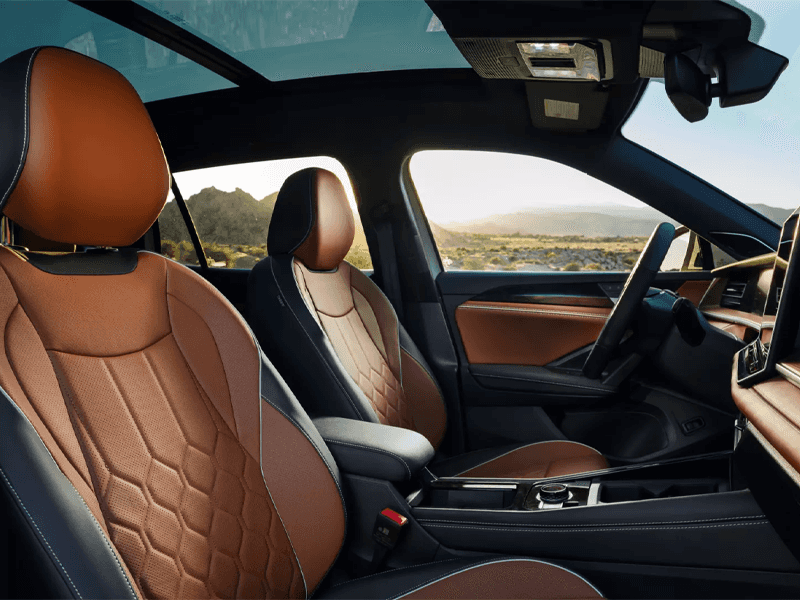
The current Tiguan is a two-row SUV with 33.8 cubic feet of cargo space behind the rear seats and 69.8 cubic feet with them folded. That gives the Tiguan useful room for groceries, strollers, sports equipment and road-trip luggage without pushing the exterior into midsize-SUV territory.
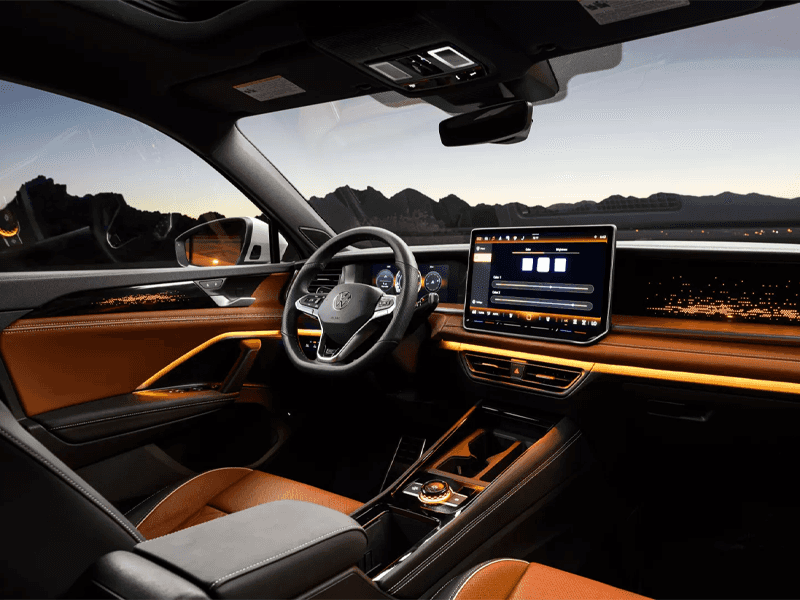
The cabin uses a modern, horizontal layout with clean design details and premium-looking materials. Upper trims build on that foundation with additional comfort, technology and appearance upgrades, making the Tiguan feel more refined than its practical dimensions might suggest.
Volkswagen Tiguan Technology & Safety
A 12-inch display is standard, and higher trims expand the digital experience with larger interfaces and additional convenience features. The Tiguan’s clean dashboard design helps those displays feel integrated into the cabin rather than added as an afterthought.
IQ.DRIVE driver-assistance technology supports functions such as adaptive cruise control and lane-centering assistance. The myVW and myVW+ ecosystem can add connected features such as remote vehicle functions when properly equipped and activated. For shoppers comparing mainstream compact SUVs, Tiguan’s combination of technology and understated interior design is an important part of its appeal.
Volkswagen Tiguan Key Specs
| Standard engine | 2.0L turbo, 201 hp |
|---|---|
| SEL R-Line Turbo | 268 hp / 258 lb.-ft. |
| Transmission | 8-speed automatic |
| Drive | FWD or available 4MOTION AWD |
| Cargo behind 2nd row | 33.8 cu. ft. |
| Max cargo | 69.8 cu. ft. |
| Standard display | 12 in. |
| Seating | 5 |
Compare the Volkswagen Tiguan
The Tiguan competes with several of the most recognizable compact SUVs on the market, but its approach is somewhat different. Rather than centering the lineup on hybrid efficiency or rugged styling, Tiguan emphasizes useful space, turbocharged performance, clean design and a more road-focused driving character.
Volkswagen Tiguan vs. Honda CR-V
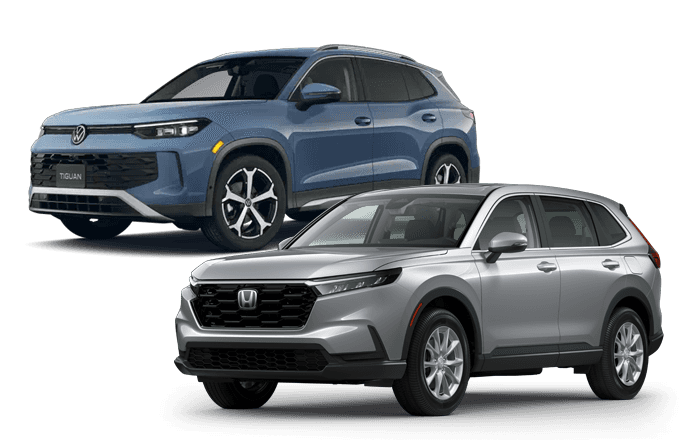
The Honda CR-V is one of the most natural Tiguan comparisons for shoppers focused on everyday passenger room, cargo usability and a manageable compact-SUV footprint. Both are designed to work well as daily family vehicles without requiring the size of a three-row SUV.
The two take different approaches to powertrains and character. CR-V shoppers can consider hybrid power, while Tiguan stays with turbocharged gasoline engines and offers the higher-output SEL R-Line Turbo for buyers who value stronger performance. Tiguan also brings Volkswagen’s own cabin design and road-focused personality to the comparison.
Volkswagen Tiguan vs. Toyota RAV4
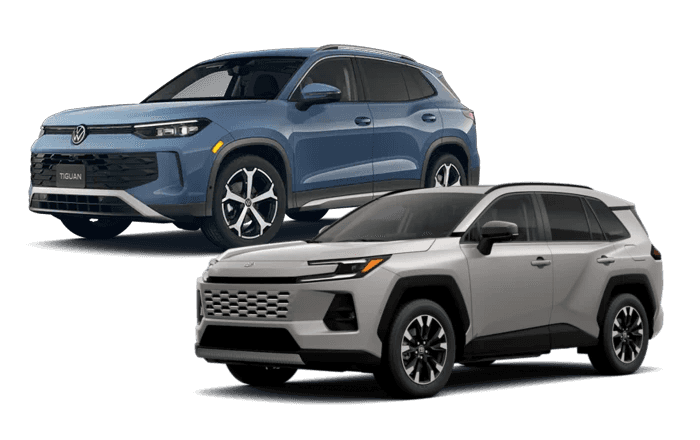
The Toyota RAV4 is especially relevant for shoppers who are deciding whether fuel efficiency or traditional turbocharged performance matters more. The redesigned RAV4 lineup focuses entirely on hybrid and plug-in hybrid power, while Tiguan continues with a conventional turbocharged engine strategy.
RAV4 may make more sense if electrified driving is a priority. Tiguan is the more direct fit for shoppers who prefer a traditional gasoline SUV, available 4MOTION all-wheel drive and a more restrained, road-focused design. Both offer useful two-row passenger and cargo space.
Volkswagen Tiguan vs. Hyundai Tucson
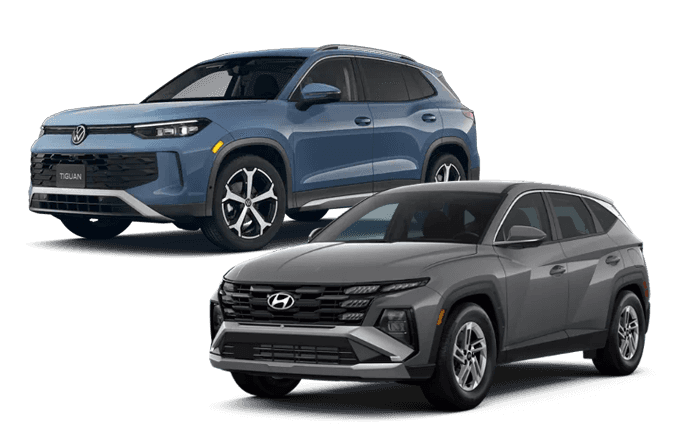
The Hyundai Tucson gives shoppers a wider range of powertrain strategies, including gasoline, hybrid and plug-in hybrid models. That makes Tucson especially appealing to shoppers who want to choose their level of electrification before deciding on trim.
Tiguan takes a more focused route with turbocharged gasoline power, available 4MOTION AWD and a higher-output SEL R-Line Turbo. The comparison may ultimately come down to whether you value Tucson’s powertrain flexibility or Tiguan’s design, road manners and performance-oriented flagship.
Volkswagen Tiguan vs. Mazda CX-50
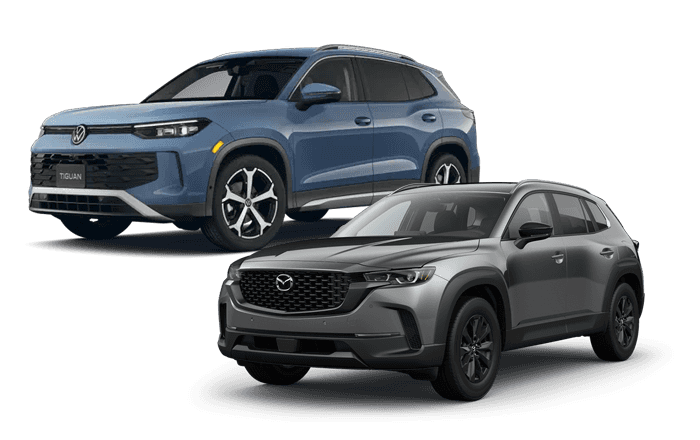
The Mazda CX-50 is another useful comparison for drivers who care about more than passenger and cargo measurements. Like Tiguan, it appeals to shoppers who put design, road feel and the overall driving experience higher on the priority list than some compact-SUV buyers do.
The CX-50 leans toward a more outdoors-oriented image, while Tiguan feels more refined and urban in its presentation. Tiguan’s SEL R-Line Turbo also gives shoppers a higher-output option while maintaining the same basic two-row SUV packaging.
Which Compact SUV Should You Choose?
Start with the priorities that will affect you every day. If hybrid fuel economy is essential, several Tiguan competitors offer electrified choices. If you need a third row, you will need to move beyond the current Tiguan entirely. But if you want a two-row SUV with useful cargo space, available all-wheel drive, clean interior design and turbocharged performance, Tiguan deserves a close look.
The Tiguan stands out most for shoppers who want mainstream compact-SUV practicality without giving up a more refined design and driving personality. The available SEL R-Line Turbo broadens that appeal by giving performance-minded buyers a meaningful step beyond the standard engine.
Why the Volkswagen Tiguan Lineup Stands Out
The current third-generation Tiguan combines updated styling, modern technology and everyday two-row utility with two distinct levels of turbocharged performance. Most trims use the 201-horsepower engine, while the SEL R-Line Turbo raises output to 268 horsepower. That gives shoppers the ability to prioritize value, comfort, sportier styling or stronger performance without leaving the Tiguan lineup.
Find a McGrath Store for the Volkswagen Tiguan
When you have narrowed the Tiguan to a trim and drivetrain, McGrath can connect you with the Volkswagen location that carries the models you want to compare. If performance matters, compare the standard 201-horsepower Tiguan with the SEL R-Line Turbo, and decide whether available 4MOTION all-wheel drive should be part of your search.
View Volkswagen Tiguan Inventory Find a McGrath Location Schedule Service
Volkswagen Tiguan FAQs
How much horsepower does the Volkswagen Tiguan have?
Most trims make 201 horsepower. The SEL R-Line Turbo increases output to 268 horsepower and 258 lb.-ft. of torque.
Does the Volkswagen Tiguan have all-wheel drive?
Yes. Volkswagen 4MOTION all-wheel drive is available on selected trims and is part of the SEL R-Line Turbo configuration.
How much cargo space does the Volkswagen Tiguan have?
The Tiguan provides 33.8 cubic feet behind the rear seat and up to 69.8 cubic feet with the rear seats folded.
Does the current Volkswagen Tiguan have a third row?
No. The current U.S. Tiguan is a two-row, five-passenger compact SUV.
What is the difference between Tiguan SE R-Line Black and SEL R-Line Turbo?
SE R-Line Black emphasizes sportier styling, while SEL R-Line Turbo adds the more powerful 268-horsepower engine along with top-level equipment.
