

Hyundai Tucson Research
Compare Hyundai Tucson gas, hybrid and plug-in hybrid powertrains, trims, efficiency, interior space, technology and other key details before you start shopping specific Tucson models.
Hyundai Tucson at a Glance
Research the Hyundai Tucson
The Hyundai Tucson gives compact SUV shoppers three different powertrain paths under one familiar name. You can keep things simple with a gasoline model, step into a hybrid for stronger fuel economy without plugging in, or choose the Tucson Plug-In Hybrid for a useful stretch of electric driving before the gas engine takes over.
This guide helps you compare those choices along with interior space, trims, technology and the compact SUVs most likely to be on the same shopping list.
Is the Hyundai Tucson Right for You?
Tucson is a good fit for shoppers who want a compact SUV that feels roomy enough for family use without moving into a midsize footprint. Rear-seat space is generous for the class, the cargo area is practical, and the dashboard puts a strong emphasis on modern displays and driver-assistance technology. One of the Tucson’s biggest advantages is being able to choose a powertrain based on your driving habits rather than changing vehicles entirely.
Gas models make sense for buyers who want the simplest ownership experience and a more traditional powertrain. Hybrid models are a strong middle ground because they improve efficiency without requiring charging. Plug-in hybrid models make the most sense when you can charge at home or work and regularly drive short enough trips to take advantage of the EPA-estimated electric range.
Hyundai Tucson Trim Levels
The Tucson lineup gives shoppers several ways to balance price, efficiency, features and electrified driving. Start by choosing the powertrain that fits your routine, then compare the available trims within that part of the lineup.
Gas Tucson
The gasoline Tucson is the straightforward choice and is offered in familiar Hyundai trim levels ranging from value-focused models to Limited. Start here if simple refueling and a conventional powertrain matter more than maximum fuel economy.
Tucson Hybrid
The Tucson Hybrid produces 231 combined horsepower. It can be a strong all-around choice for shoppers who want improved efficiency while keeping essentially the same fueling routine as a conventional gas SUV.
Tucson Plug-In Hybrid
The plug-in hybrid produces 268 combined horsepower and offers an EPA-estimated 32 miles of electric range. It works best for drivers who can charge consistently and want to complete many local trips using electric power.
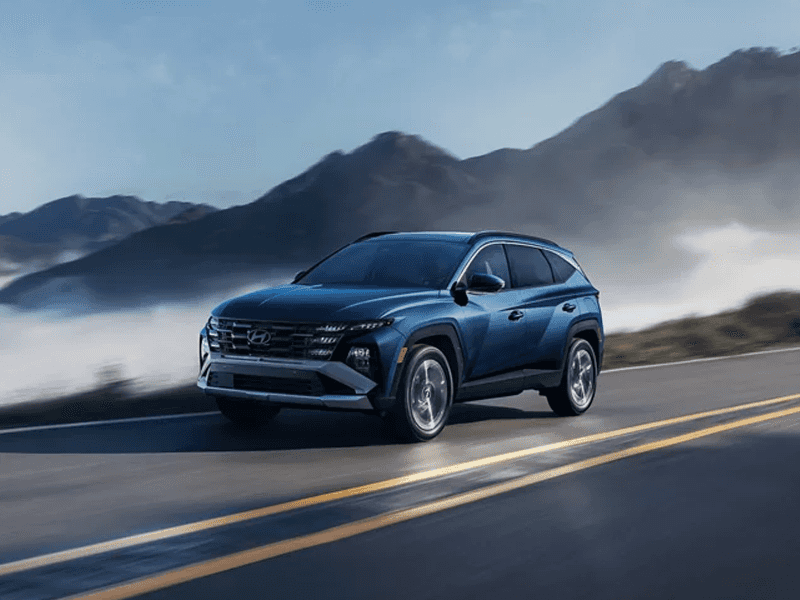
Hyundai Tucson Gas, Hybrid & Plug-In Hybrid Performance
The gasoline Tucson uses a 2.5-liter four-cylinder engine, while the hybrid and plug-in hybrid models pair a turbocharged 1.6-liter engine with electric assistance. Each takes a different approach to balancing performance, efficiency and everyday convenience.
Traditional gasoline power for straightforward everyday driving.
Up to 38 MPG combined on select configurations.
EPA-estimated 32 miles of all-electric range.
Hyundai Tucson Interior, Seating & Cargo
Tucson’s interior is one reason it competes so well with other compact SUVs. The rear seat provides adult-friendly legroom, and the cargo area is shaped for everyday usability rather than just producing a strong number on paper.
Hybrid packaging preserves much of the practicality shoppers expect from the gas model. Plug-in hybrid models sacrifice some cargo volume to battery packaging, but they remain useful two-row family vehicles. The combination of rear-seat room and flexible cargo space makes Tucson especially relevant for buyers who want compact exterior dimensions without a cramped cabin.
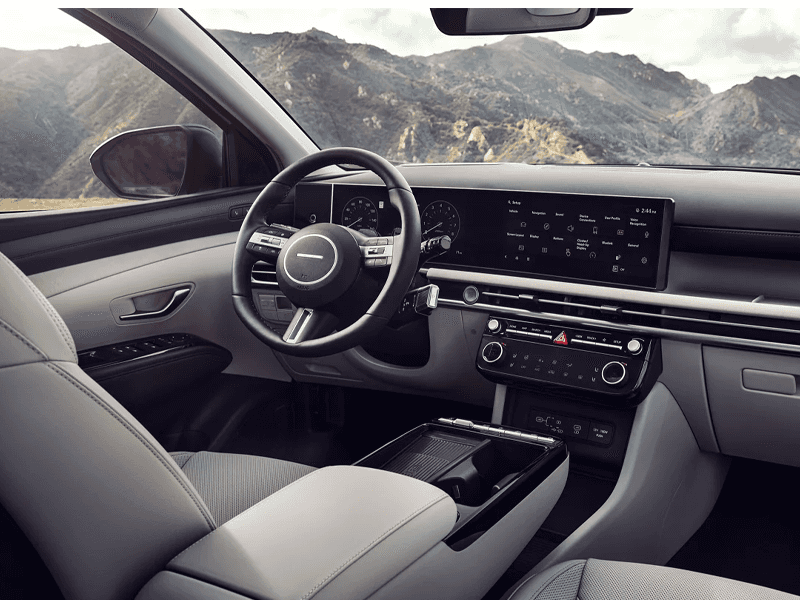
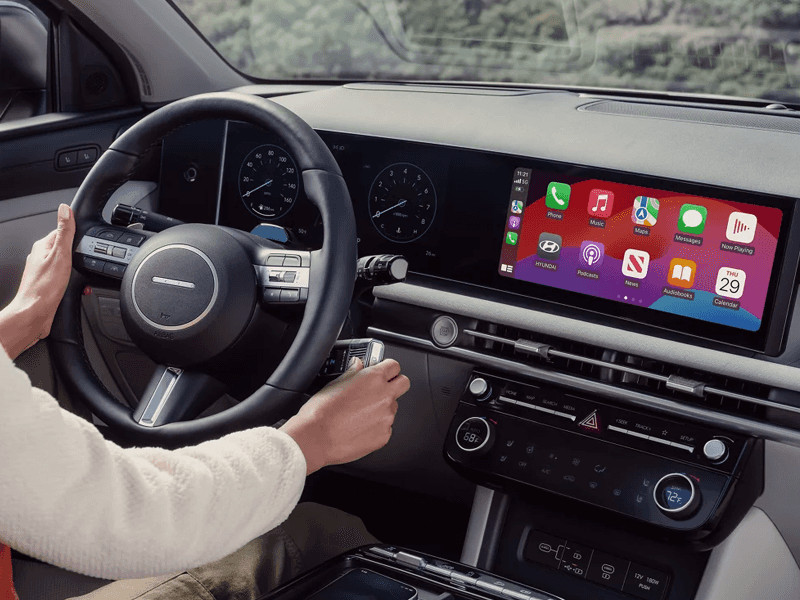
Hyundai Tucson Technology & Safety
A 12.3-inch touchscreen is widely available across the Tucson family, and upper trims add a 12.3-inch digital instrument cluster along with more advanced camera and parking technology.
Hyundai SmartSense features can include blind-spot monitoring, lane-centering assistance, adaptive cruise control and available Blind-Spot View Monitor. Limited models add features such as Remote Smart Parking Assist and Surround View Monitor. For many buyers, Tucson’s combination of displays, cameras and driver-assistance features is one of its strongest arguments against more conservative compact SUVs.
Hyundai Tucson Key Specs
| Gas powertrain | 2.5L four-cylinder |
|---|---|
| Hybrid output | 231 combined hp |
| Plug-in hybrid output | 268 combined hp |
| Hybrid efficiency | Up to 38 MPG combined on select models |
| Plug-in EV range | 32 miles EPA-est. |
| PHEV gas efficiency | 35 MPG combined EPA-est. |
| Length | Approx. 182.7 in. |
| Rear legroom | Approx. 41 in., depending on powertrain |
Compare the Hyundai Tucson
The Tucson competes with several popular compact SUVs that approach efficiency, powertrain choice, passenger space and technology differently. Tucson’s biggest distinction is that shoppers can still compare gasoline, hybrid and plug-in hybrid versions within the same model family.
Hyundai Tucson vs. Toyota RAV4
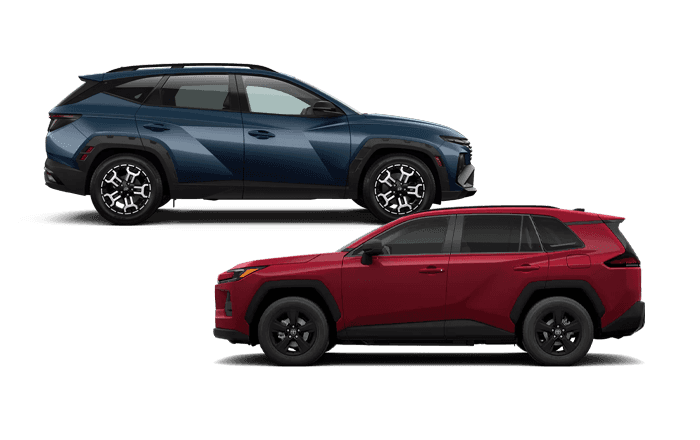
The Toyota RAV4 is one of Tucson’s most direct compact-SUV competitors, but the two lineups now take different approaches to powertrain choice. The redesigned RAV4 is built entirely around hybrid and plug-in hybrid power, while Tucson continues to offer gasoline, hybrid and plug-in hybrid models.
That difference matters if you are not yet sure whether you want an electrified vehicle. Tucson allows shoppers to compare three approaches without leaving the model family, while RAV4 starts with hybrid power as the baseline. Both offer AWD availability, strong everyday utility and dedicated electrified versions.
Hyundai Tucson vs. Honda CR-V
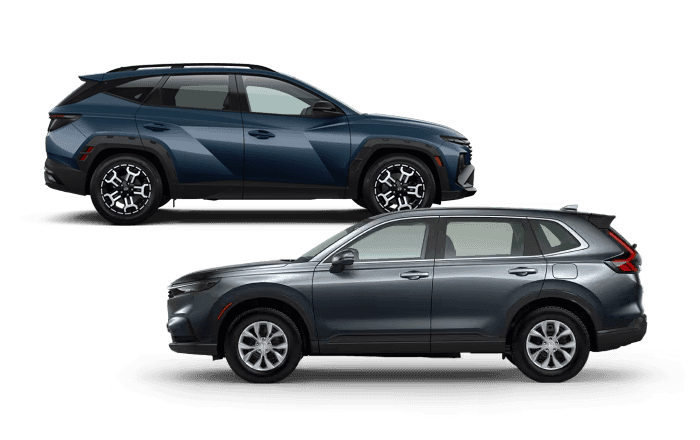
The Honda CR-V is another natural Tucson comparison for shoppers focused on passenger space, cargo usability and everyday comfort. Both are two-row compact SUVs designed to handle commuting, family use and longer trips without moving into a larger vehicle class.
CR-V shoppers can choose between gasoline and hybrid power, while Tucson adds a plug-in hybrid option to the mix. Tucson also places a strong emphasis on large displays, camera technology and available parking assistance, which may matter to shoppers comparing upper trims.
Hyundai Tucson vs. Kia Sportage
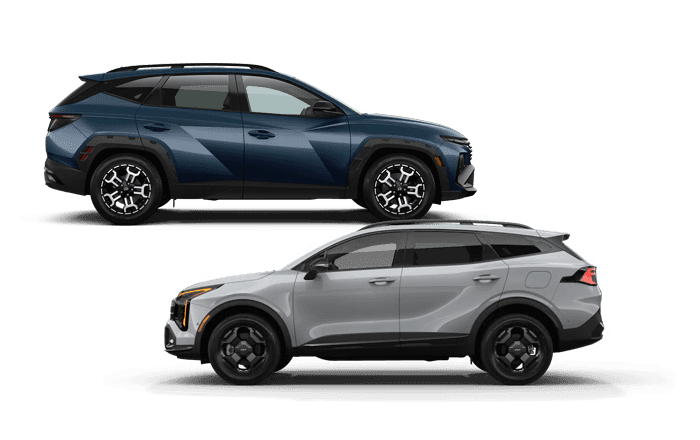
The Kia Sportage is one of Tucson’s closest comparisons because it also gives shoppers gasoline, hybrid and plug-in hybrid choices. That makes it especially useful for buyers who already know which type of powertrain they want and are now comparing styling, features and interior layout.
The two SUVs take their own approaches to design and trim packaging, so the decision is often less about choosing an energy strategy and more about which cabin, exterior design and equipment package better fits the shopper.
Hyundai Tucson vs. Ford Escape
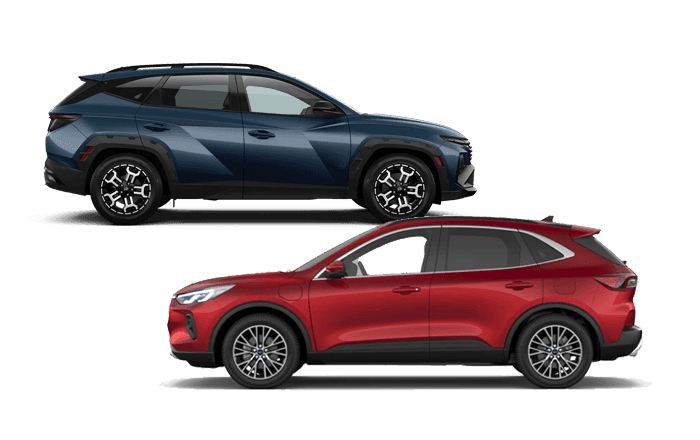
The Ford Escape is another useful comparison for shoppers interested in fuel-efficient compact SUVs. Its lineup gives buyers multiple powertrain directions, including electrified choices, while keeping the familiar size and usability of a two-row crossover.
Tucson counters with its roomy rear seat, available HTRAC all-wheel drive, strong technology package and the ability to move from gasoline to hybrid to plug-in hybrid within one model family. When comparing the two, look at the specific drivetrain and trim rather than treating every Tucson or Escape as the same vehicle.
Which Compact SUV Should You Choose?
Start with your normal driving routine. If you want familiar gasoline ownership, the Tucson gives you that option. If you want better fuel economy without thinking about charging, the Hybrid is the more natural step. If you have convenient charging and make a lot of shorter trips, the Plug-In Hybrid adds another layer of electric driving.
The Tucson stands out because shoppers do not have to choose a completely different vehicle to change powertrain strategies. Its gas, hybrid and plug-in hybrid options are paired with the same basic strengths: a roomy two-row cabin, practical cargo space and a technology-focused interior.
Why the Hyundai Tucson Lineup Stands Out
The Tucson remains unusual among compact SUVs because shoppers can choose gasoline, hybrid or plug-in hybrid power within the same model family. The Hybrid reaches up to 38 MPG combined on select configurations, while the Plug-In Hybrid provides an EPA-estimated 32 miles of electric range. That breadth lets you start with the way you drive and then choose the Tucson trim and equipment that fit around it.
Find a McGrath Store for the Hyundai Tucson
When you have narrowed the Tucson down to gas, hybrid or plug-in hybrid, McGrath can connect you with the Hyundai location that carries the models you want to compare. If you are considering the plug-in hybrid, use that visit to talk through home-charging needs along with trim and feature differences.
View Hyundai Tucson Inventory Find a McGrath Location Schedule Service
Hyundai Tucson FAQs
Is the Hyundai Tucson available as a hybrid?
Yes. The Tucson Hybrid produces 231 combined horsepower and offers fuel economy up to 38 MPG combined on select configurations.
Does the Hyundai Tucson come as a plug-in hybrid?
Yes. The Tucson Plug-In Hybrid produces 268 combined horsepower and has an EPA-estimated 32-mile all-electric range.
Do I have to plug in the Tucson Hybrid?
No. The regular Tucson Hybrid recharges through the engine and regenerative braking. Only the Plug-In Hybrid is designed to be charged externally.
Is all-wheel drive available on the Hyundai Tucson?
Yes. AWD is available on multiple Tucson models, and the Plug-In Hybrid uses standard HTRAC all-wheel drive.
Which Hyundai Tucson powertrain is best?
Gas is the most traditional choice, Hybrid offers improved efficiency without requiring external charging, and Plug-In Hybrid makes the most sense for drivers who can charge regularly and want to use electric power for shorter trips.
